
It’s been a nervous month for winemakers across France. The most notable casualties have been Burgundy, Loire and Beaujolais, but the Champenois are also holding their breath anxiously.
With these sudden high temperatures (24-25ºC) come violent thunderstorms. (Yeah, the weather has gone straight from torrential rain (you can’t have missed the media coverage of all the flooding in France and of the high river level in Paris recently.)

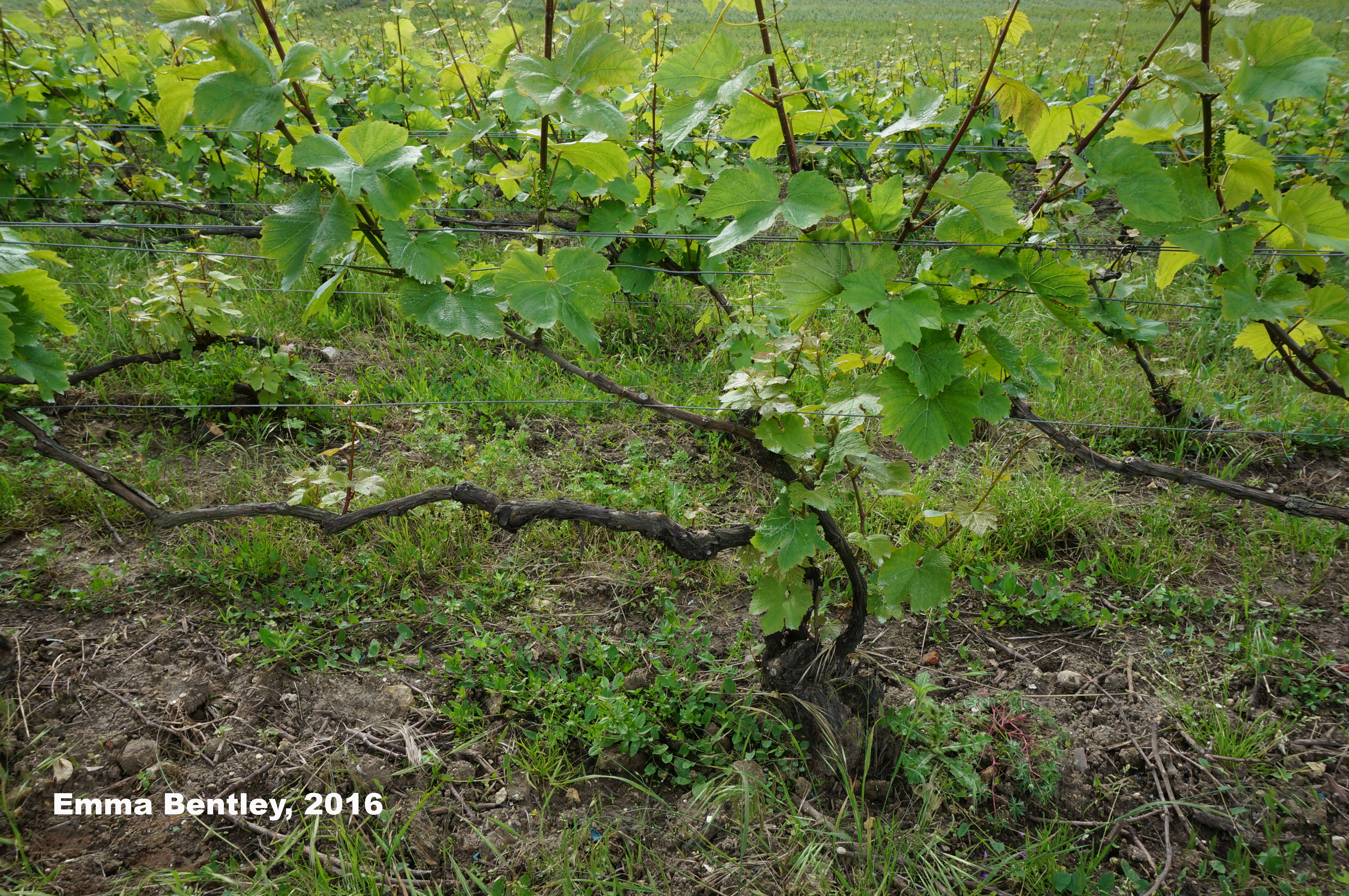
Even as Mel and I were walking through the ungrafted Chardonnay vines (one of the only ungrafted vineyards in the whole Champagne region!) we saw lightning strike the opposite side of the valley. Micheline, Mel’s mother, had told us not to take too long. Fortunately, she needn’t have worried – for the first time in history, an English girl brought the sunshine with her!
The Tarlant family are based in Oeuilly, just west of Epernay in the Vallée de la Marne. They have 14 hectares of vines, which are split into a mosaic of 55 different plots in 4 neighbouring villages: Oeuilly, Boursault, St-Agnan and Celles-lès-Condé. Each of these plots are vinified separately and only blended for the final bottlings.


Geologically-speaking, this side of the valley lies on one side of a fragment. The base layer here is predominantly chalk, then hard limestone then a softer clay-limestone (“sparnacien“) mixture. However, this particular plot of ungrafted Chardonnay (which becomes “La Vigne d’Antan“) is composed of sand, hence why the vines date back to pre-phylloxera days.
The Champagne Tarlant is very much a family affair. Since 1687, generation after generation have looked after the land, despite waves of invasion and destruction by the Russians Cossacks (1814), then WW1 (1914-1918) and, to a lesser extent, WW2 (1939-1945.)
I learnt that there is an unexploded WW2 bomb in one of the vineyards. Before Georges Tarlant (Mel’s grandfather) died in 2008, thanks to modern technology – well, more precisely, Google Maps – he was able to tell them exactly where the bomb is located!

The spread of grape varieties is fairly even: 40% Pinot Noir, 30% Chardonnay and 30% Pinot Meunier.
Pinot Meunier is the most autochthonous grape for this part of the valley. The most distinctive thing about this plant is its blue-grey leaves…. which actually gave the varietal its name. Meunier is the French word for a miller and it does indeed look like the leaves have been given a light dusting of flour.
There are also miniscule quantities of Petit Meslier, Pinot Blanc and Arbanne (which go into the cuvée “BAM!”)
Having tasted these wines on several occasions recently – at Villa Favorita (April 2016) and Rue89 (May 2016) – I have been lucky enough to try practically the whole range, even their most prestiguous wines.
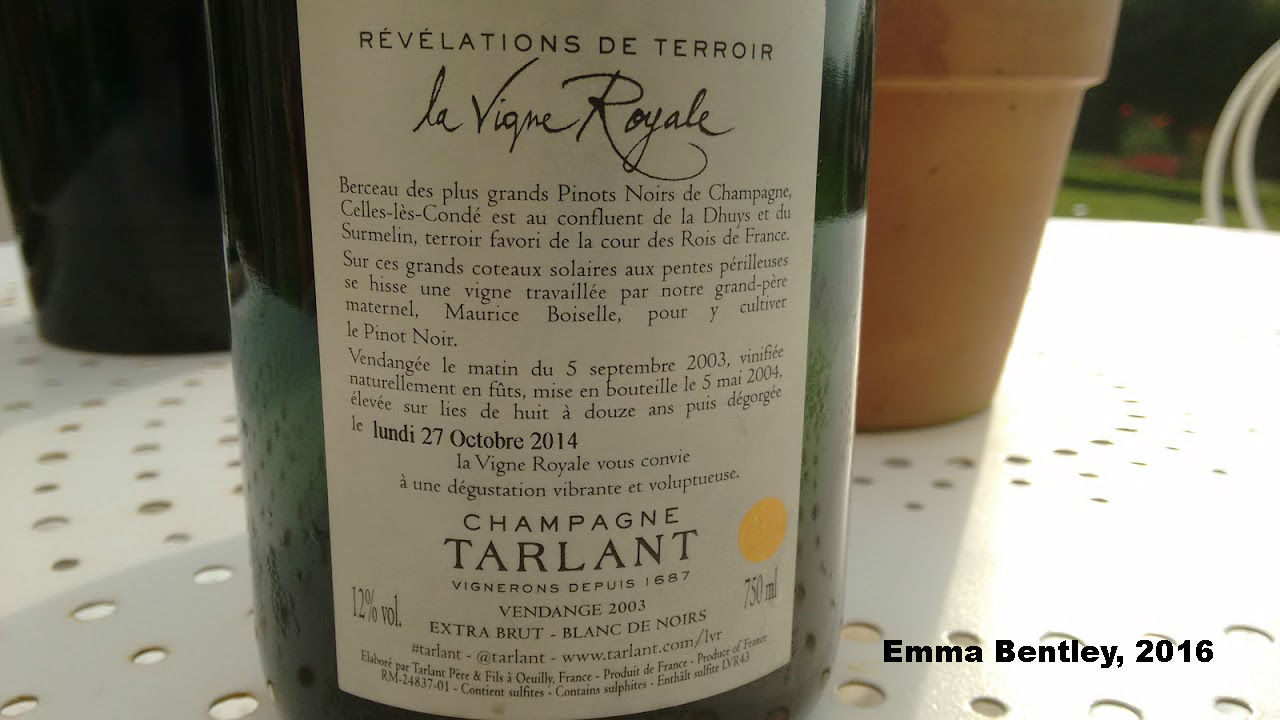
Special mention to the Cuvée Louis: 70 year old vines which, due to their lengthy élevage in oak, show a generous complexity and to La Vigne Royale (blanc de noirs) for its wonderful vibrancy.
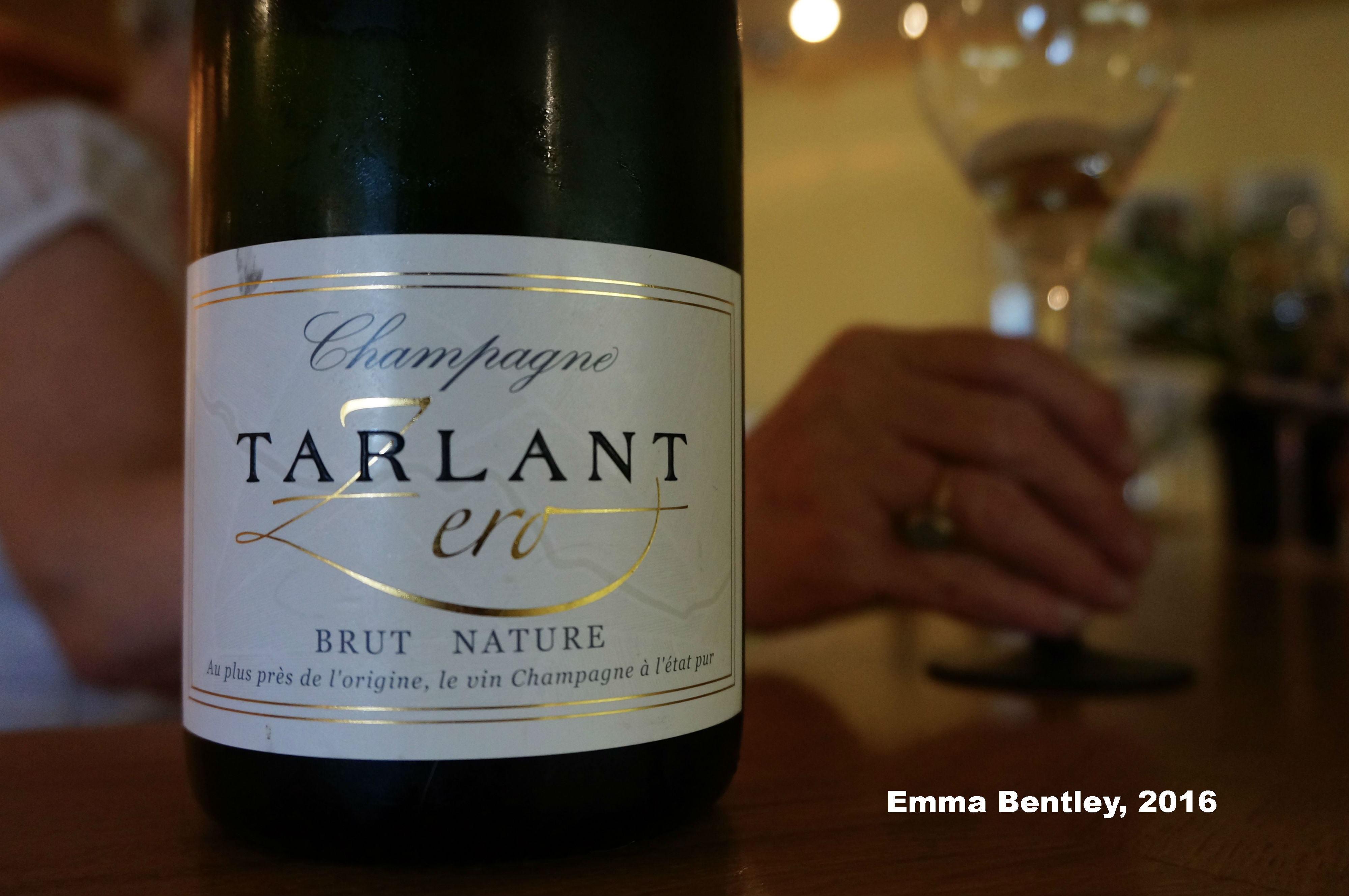
However, in terms of price-quality ratio, the Brut Zero is unbeatable. Having had no sugar added at bottling (commonly called zero dosage) means that the wine is bracingly dry, pure and fabulously refreshing. In short, it’s my style of Champagne. Cheers!


Leave a comment