
For a long weekend last year, we went to go and stay at the Castello di Lispida, hidden away in the scenic Colli Euganei, hills of volcanic origin just south of Padova. I’d been to the Castello di Lispida before, in May 2018, for a tasting of volcanic wines called Vulcanei and so I was happy to find an occasion to return.
The estate dates back to the 11th century, when it was run by monks, but the buildings that you see today were built by the Corinaldi family who bought the estate in 1792. Currently, the estate comprises a total of 90 hectares, but only 8.5 are planted with vines and an average of 20,000 bottles are made annually.

The Lispida hill was renowned during the Venetian Republic for the presence of high-quality trachyte rock that was frequently used as a building material – particularly paving stones – in the flourishing city and further afield. (Geek out on that here…) The site’s other claim to fame is that the King Vittorio Emanuele III used the castle as his base during the end of WW1 in 1918-1919 so it is now classified as a “Villa Italia.”
As you may expect of a castle of this size and historic significance, the cellars are enormous. Approximately 2000 square metres, I’m told, but I’m not going to go measure it myself. Just take a look at the photos…
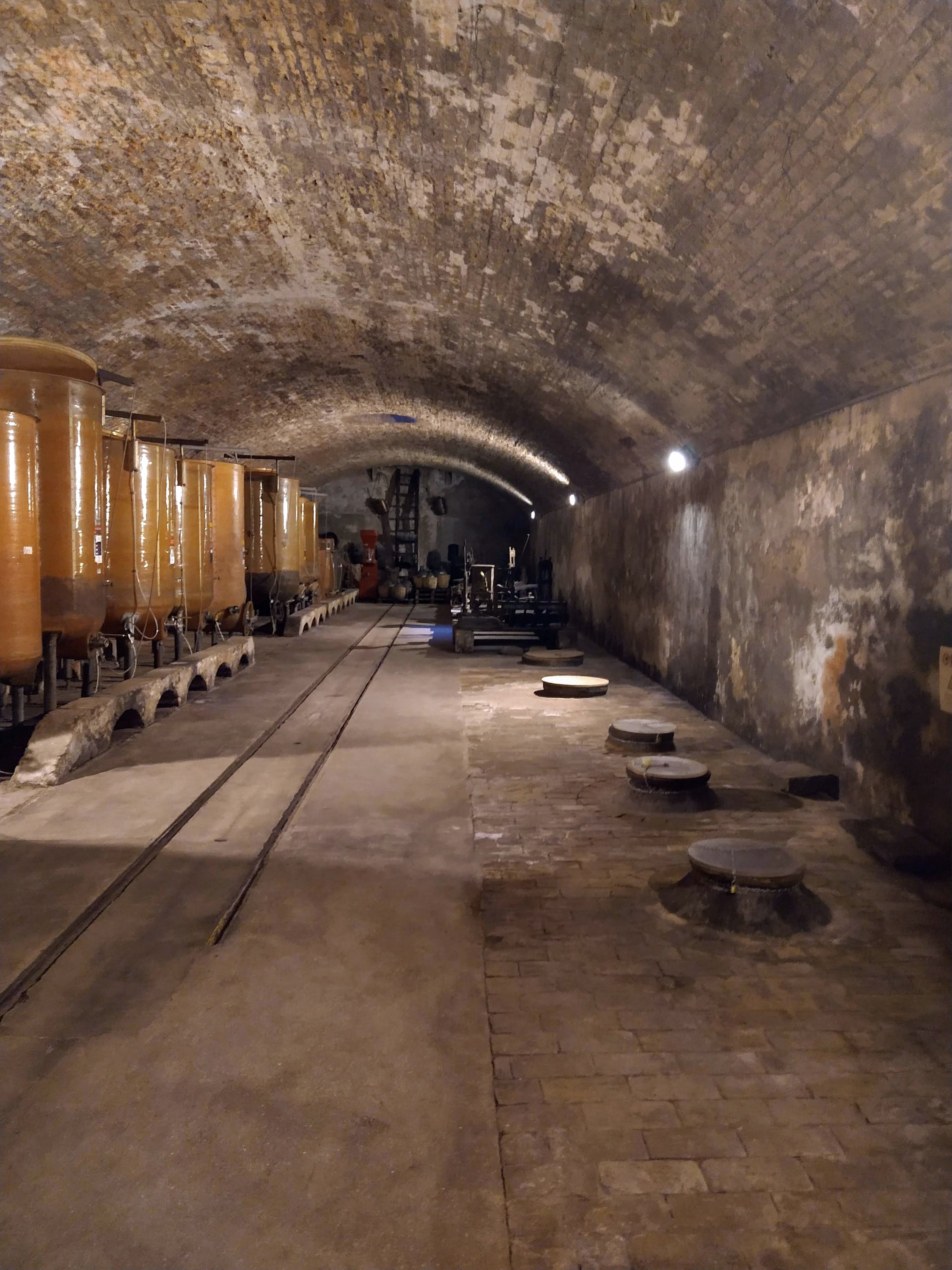


We went for a wine tasting in the cellar one evening before dinner. It started with a wine called “P. 2019” – a col fondo wine made from glera grapes (“P” stands for prosecco.) The alcoholic fermentation takes place in underground amphora (like those pictured) then the wine is blended and referments in the bottle. It’s fine, but if I’m honest, nothing particularly special.
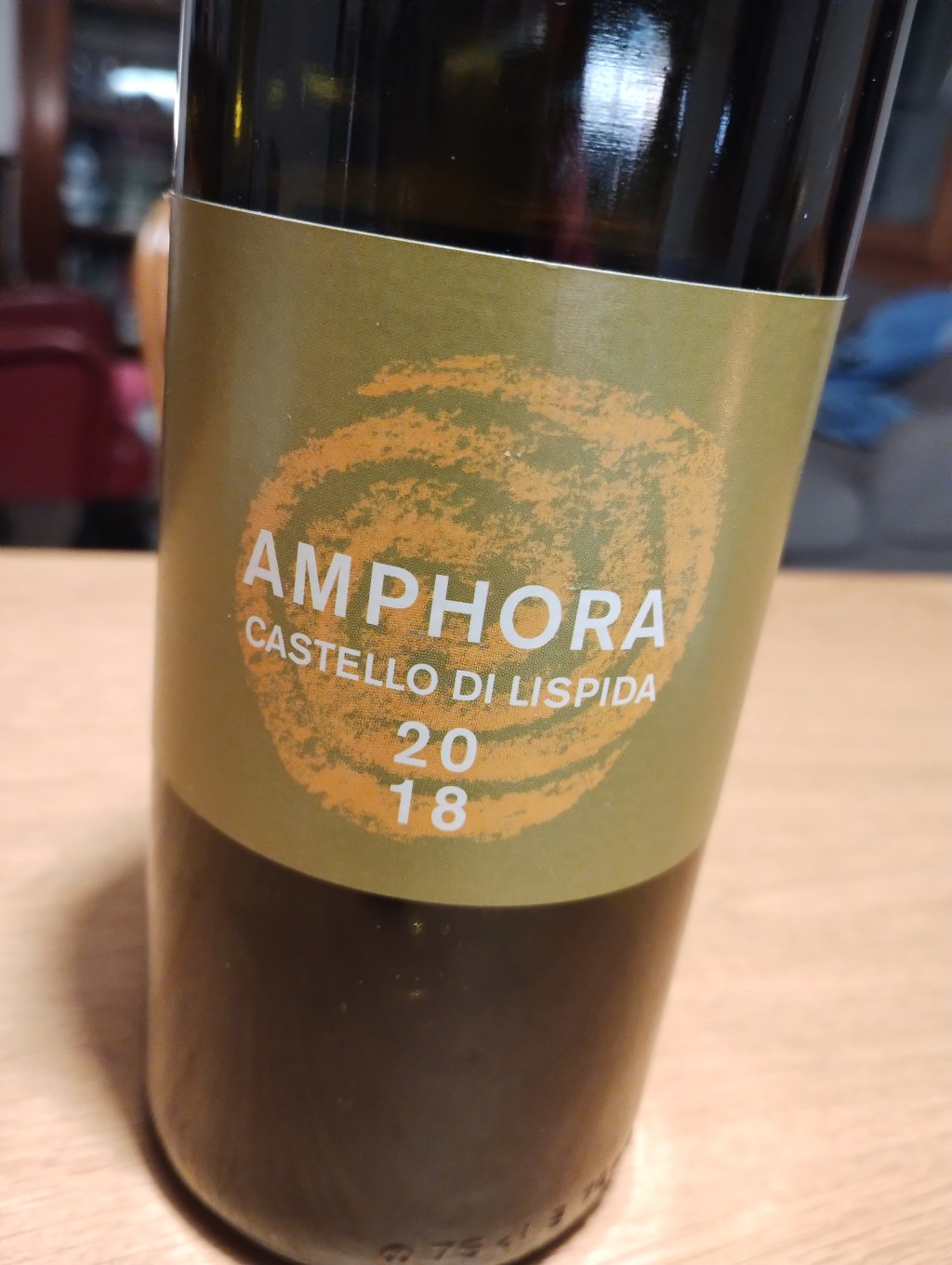
One of the wines which did pique my interest was the Amphora bianco. It was first released in 2003, back at a time when very few wines were made entirely in terracotta amphorae. The fact that it is a blend of tocai friulano & ribolla grapes reveals its raison d’etre: Alessandro Sgaravatti (owner-winemaker at Castello di Lispida)’s close friendship with Josko Gravner in the late 90s/early 00s. There are other clues of Josko Gravner’s influence, if you know where to look…
I also enjoyed both the story and taste of a wine called Amphora Rosso 2018 too. It’s a 100% Sangiovese, which, while there is Sangiovese is many regions all over Italy, caused me to raise an eyebrow because I don’t remember coming across Sangiovese in this part of the Veneto before. It turns out that rootstocks were given to Alessandro Sgaravatti by another friend – the Brunello legend, Gianfranco Soldera. The vines are now about 20 years old and they produce a super aromatic wine, not too tannic, bursting with wild strawberries and cherries.
We finish the tasting with a drop of the Montelispida 2015 Merlot which spent two years in oak butts; the story here goes that the family owning the castle were responsible for first introducing merlot into Veneto in 1870. I don’t know if it’s true… I supposed I’ll just have to go back to the Castello di Lispida to find out… what a tough life!

CASTELLO DI LISPIDA “Amphora” 2018, 13% abv, vino bianco
I’m told that, for this vintage, the wine did 6 months of skin contact and then continued amphora ageing (i.e. without the skins) for a further 8 months. Despite those 6 months on the skins, this is a wine whose colour I would define as lightly golden rather than anywhere on the orange spectrum. As I write this tasting note, I’ve just poured the very last drop from the bottle and, as a result, the liquid in my glass is very slightly cloudly, but not at all bothersomely so. Nose is precise, delicate and floral. The mouthfeel is round, smooth, slightly nutty and the acidity has a beautiful flinty character. Overall impression is: balanced perfection. It’s a natural wine – low in sulfites – but one which is approachable at all levels.
€€ – a weekend wine
**** – something special
Tasted : 10th February 2023


Leave a comment