
“Italian wines tend to have too much tannin,” says Andrew as he’s explaining why he and his partner prefer easy-drinking red wines from France.
Tannin is what dries out your mouth when you’re drinking a wine. They naturally originate in the skins, seeds and stalks of grapes, but can also be imparted from the winemaker’s barrels or (if you’re drinking conventionally-vinified wines) from adding powdered or liquid tannins at any stage from pre-fermention to just before bottling. Depending on the winemaking process and the grape variety, these compounds can make the resulting wine feel anywhere from chewy to bitter or astringent and they tend to have a drying sensation in your mouth.

“Bottle age” adds my friend Catherine wisely. She’s right; many wines we find on the market are too young. But winemakers need the cashflow and winelovers don’t always have the space for a decent wine cellar where they could store a recent vintage for a year or two, or ten.
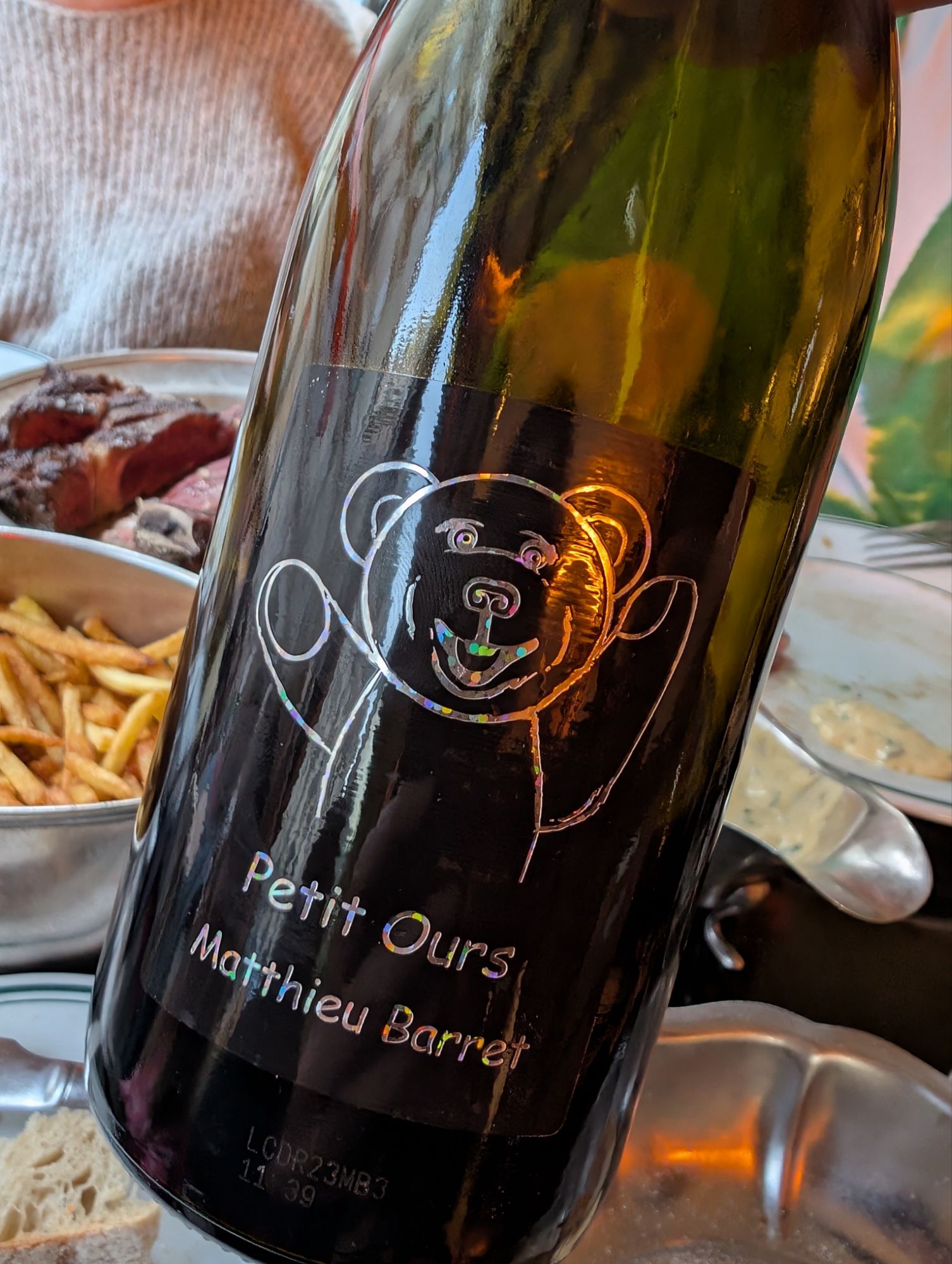
It’s not the first time I’ve heard this comment about Italian wines that are perceived as big, powerful, overly tannic… but I think my palate has adjusted to this style. I’ve been back in France three times these past two months and I had the opposite reaction to Andrew; many of the wines we drank together were so light that the grape variety was unrecognisable and the style was converging on a macerated white wine. For example, Matthieu Barret’s “Petit Ours” 2023 rouge (a wine and a winemaker I often choose when I see it on a wine list) but which, despite being a syrah, didn’t hold its own against a côte de bœuf. I am also a little surprised by the continued popularity of such light wines (hadn’t we thought that carbonic maceration was a phase that would soon die out?) but I’m not denying the drinkability of wines like Axel Prufer’s “Avanti Popolo” that we’d opened (and devoured) the night before.
So, with the aim of suggesting some Italian reds if you prefer the lighter “glou-glou” style, here’s my selection of wines that you should seek out this summer.
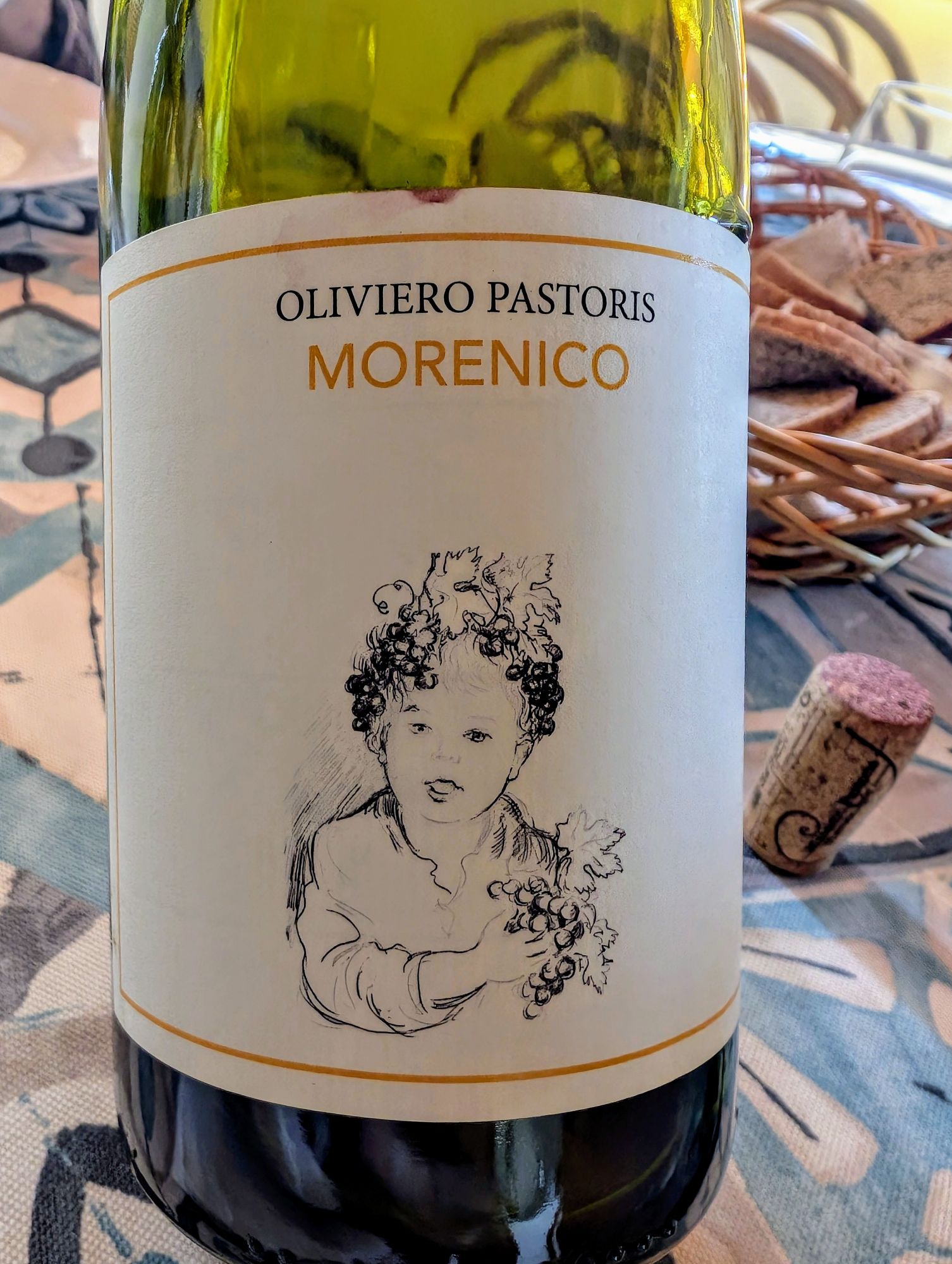

Oliviero Pastoris “Morenico” vino rosso, 13% ABV
A blend of freisa and nebbiolo, hailing from the morenic hills of Lake Viverone, near Biella in northern Piedmont. This is the wine that reminded me of the conversation with Andrew and Catherine and thus provoked this blog post.
The flavours here orientate around crunchy red fruits like cranberry and red cherry. As you would expect from this round-up of reds, obviously it’s light-bodied, but it’s also fresh, juicy, with the acidity on point and just a touch of tannin. Delicious!
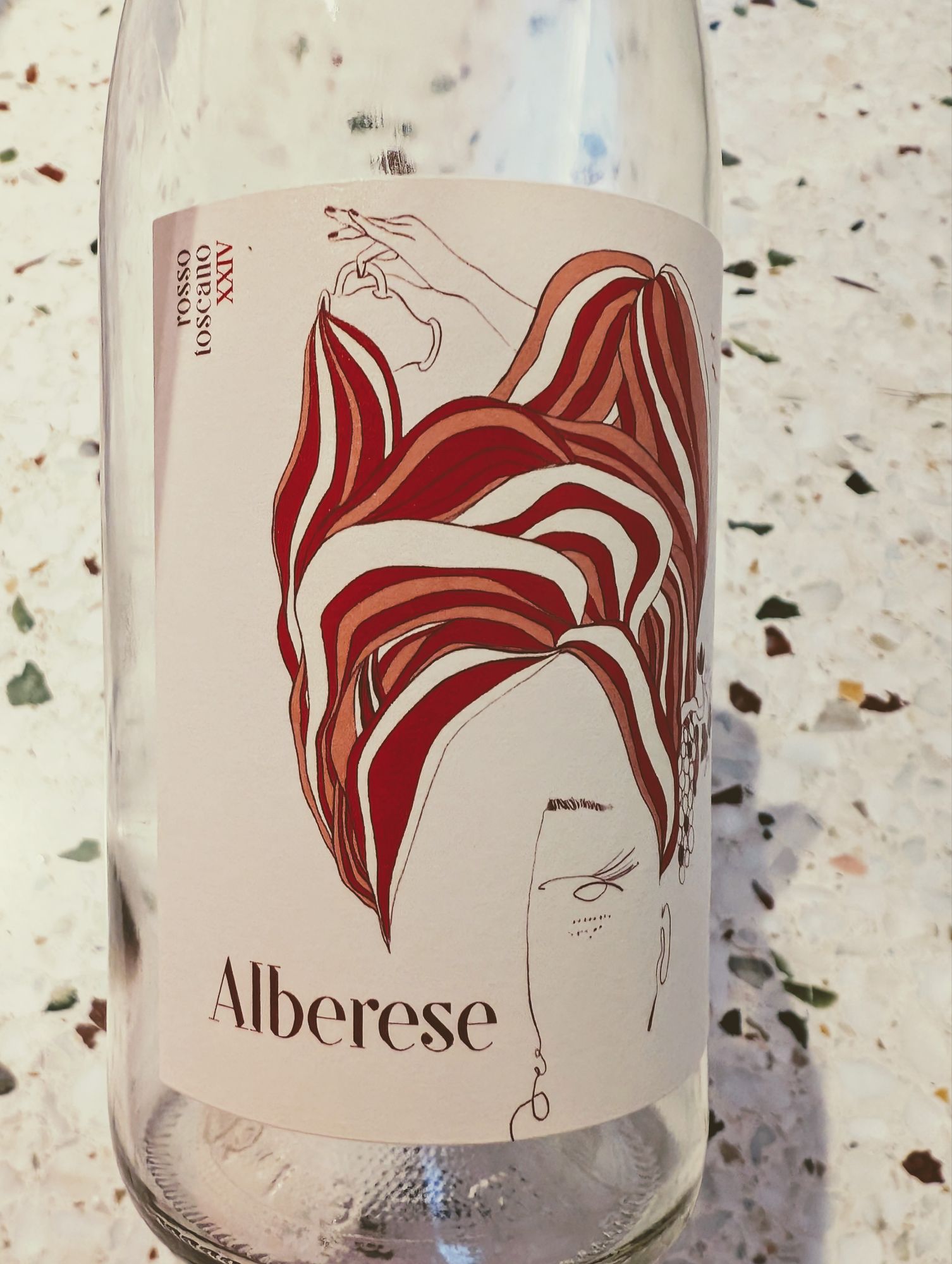
Fattoria di Sammontana “Alberese” Rosso Toscana IGT 2024, 12.5% ABV
I don’t normally write about wines in clear glass bottles (they don’t pass my sustainability pre-selection) but I was so surprised to find a light red from Tuscany for this round-up that I overlooked my habitual criteria. I love it. And you wanna know why? It combines local tradition – that of vinifying white and red grapes together – and the international contemporary trend for drinking light reds.
A blend of sangiovese and trebbiano toscano, farmed organically and biodynamically, then vinified in stainless steel and cement tanks, this is a featherweight red. Expressive but not loud, it’s perfect summer drinking.
Cantina Montecorneo570 “Tilt” Umbria Rosato IGT 2023, 13% ABV
I feel that many wines labelled as rosato in Italian would pass as a light red in France. Just think of ploussard, grolleau, etc. and compare that to a Cerasuolo d’Abruzzo, for example. Here, we are in Umbria, not Abruzzo, but it is the montepulciano grape. The nose is extraverted and delivers punnets of wild strawberries (fraise des bois.) The mouth is super light, but don’t drink this wine directly from the fridge; you’ll appreciate it more at (a cool) room temperature.
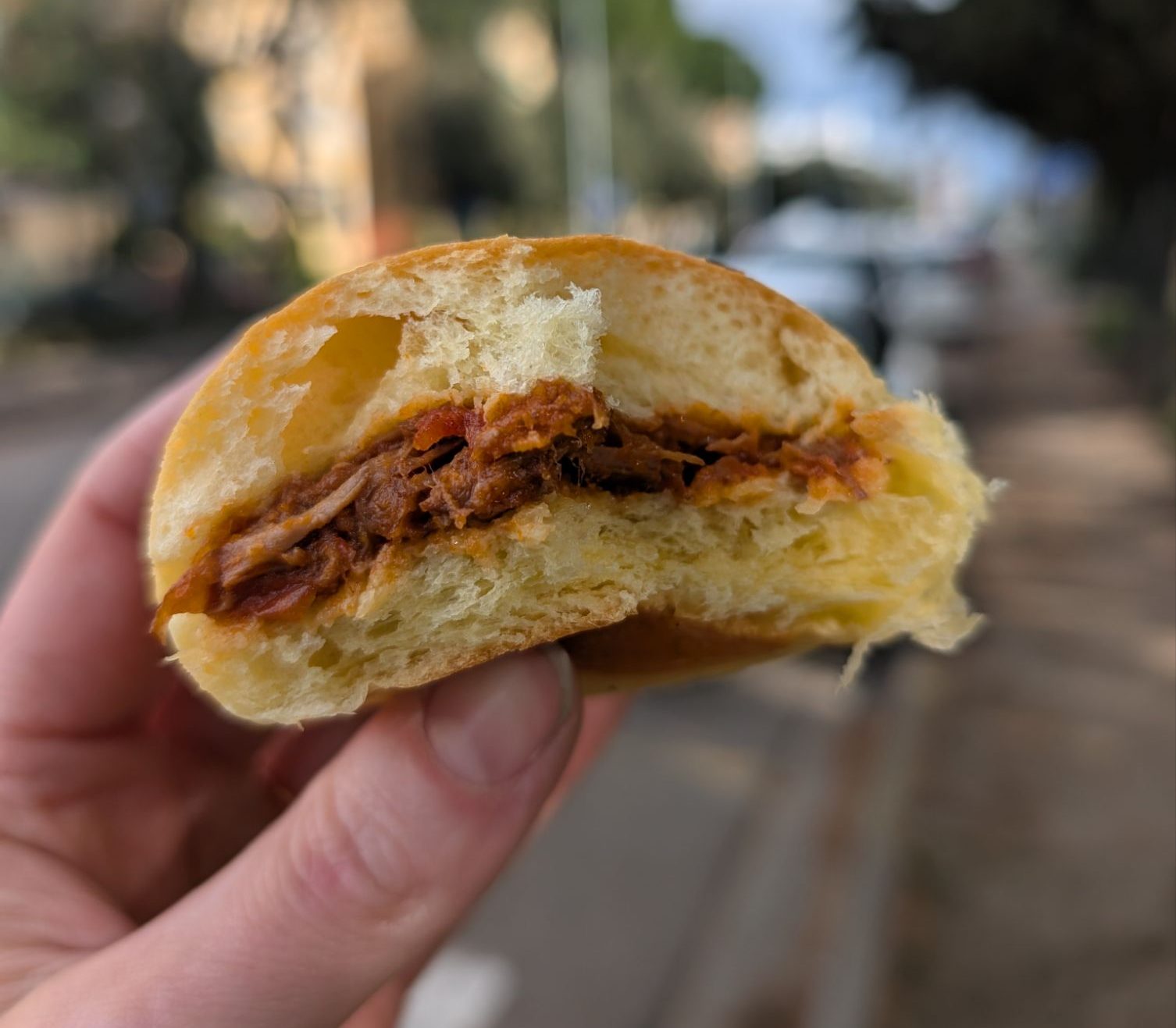
Incidentally, this wine was a match-made-in-heaven with a lampredotto (tripe) sandwich when I was in Florence a couple of months ago.
Villa Calicantus “Sovracuna” Bardolino Classico 2020, 11% ABV
I’ve written about this wine before – here – but when you think about light-bodied reds from Italy, Bardolino obviously pops to mind and there’s nobody making better natural Bardolino right now than Daniele at Villa Calicantus.
The Bardolino DOC is named after the town on the eastern coast of Lake Garda, in the Veneto. It’s a blend predominantly of corvina, but unlike neighbouring Valpolicella (where you also find the same grape varieties) here the wines tend to be fresher and less dependant on oak-ageing.
Much like the bottle of Sovracuna I opened in 2023, this wine is still in a reductive phase but nothing that a few minutes and some jiggling around in a carafe couldn’t sort out. I also maintain that this wine is not your typical light, fruity red wine that plays on tannins and acidity; Sovracuna transmits an explosion of minerality.
If you like Axel Prufer’s “Avanti Popolo”, try this!
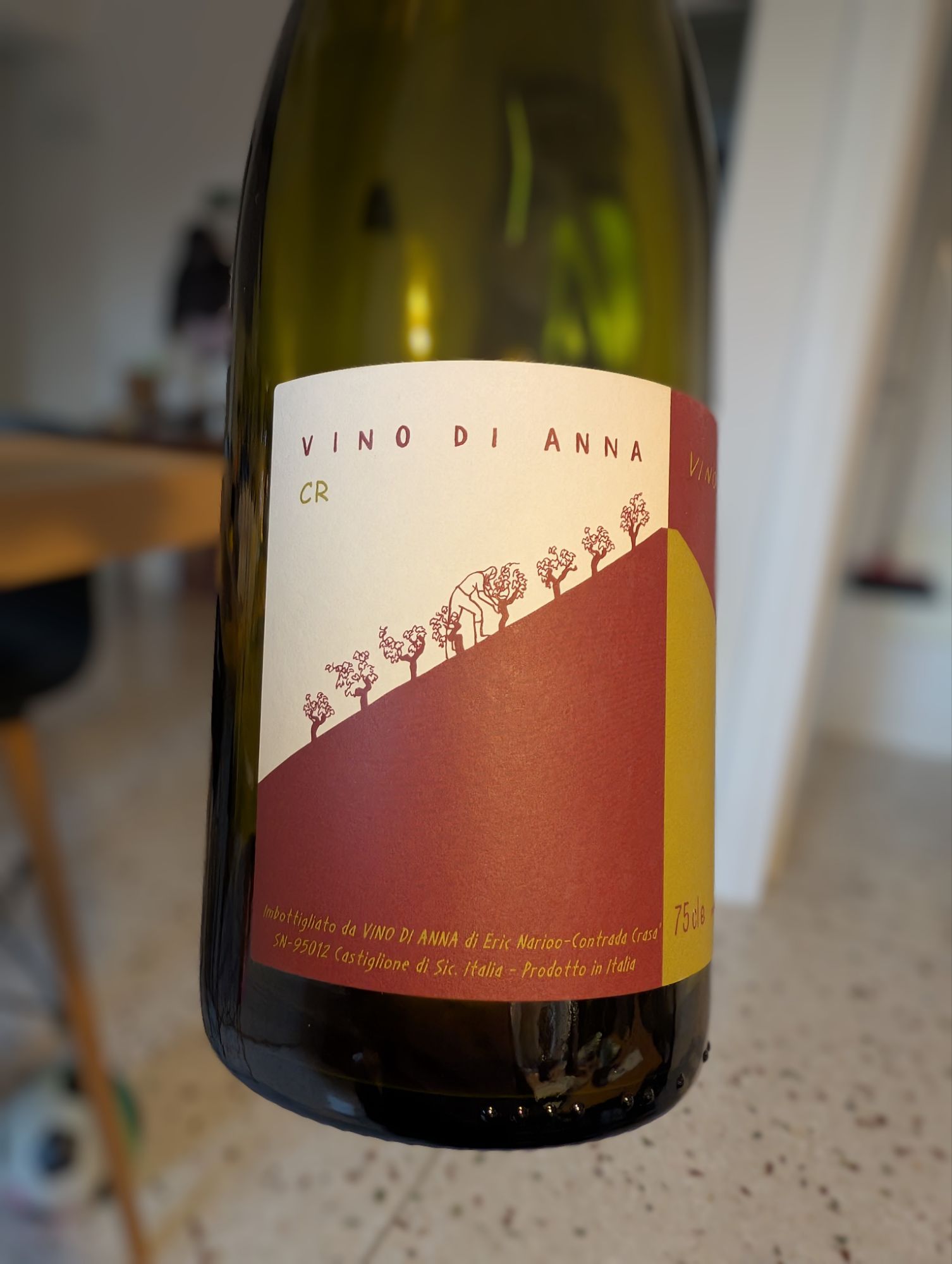
Vino di Anna “CR” vino rosso (LNH020), 13.5% ABV
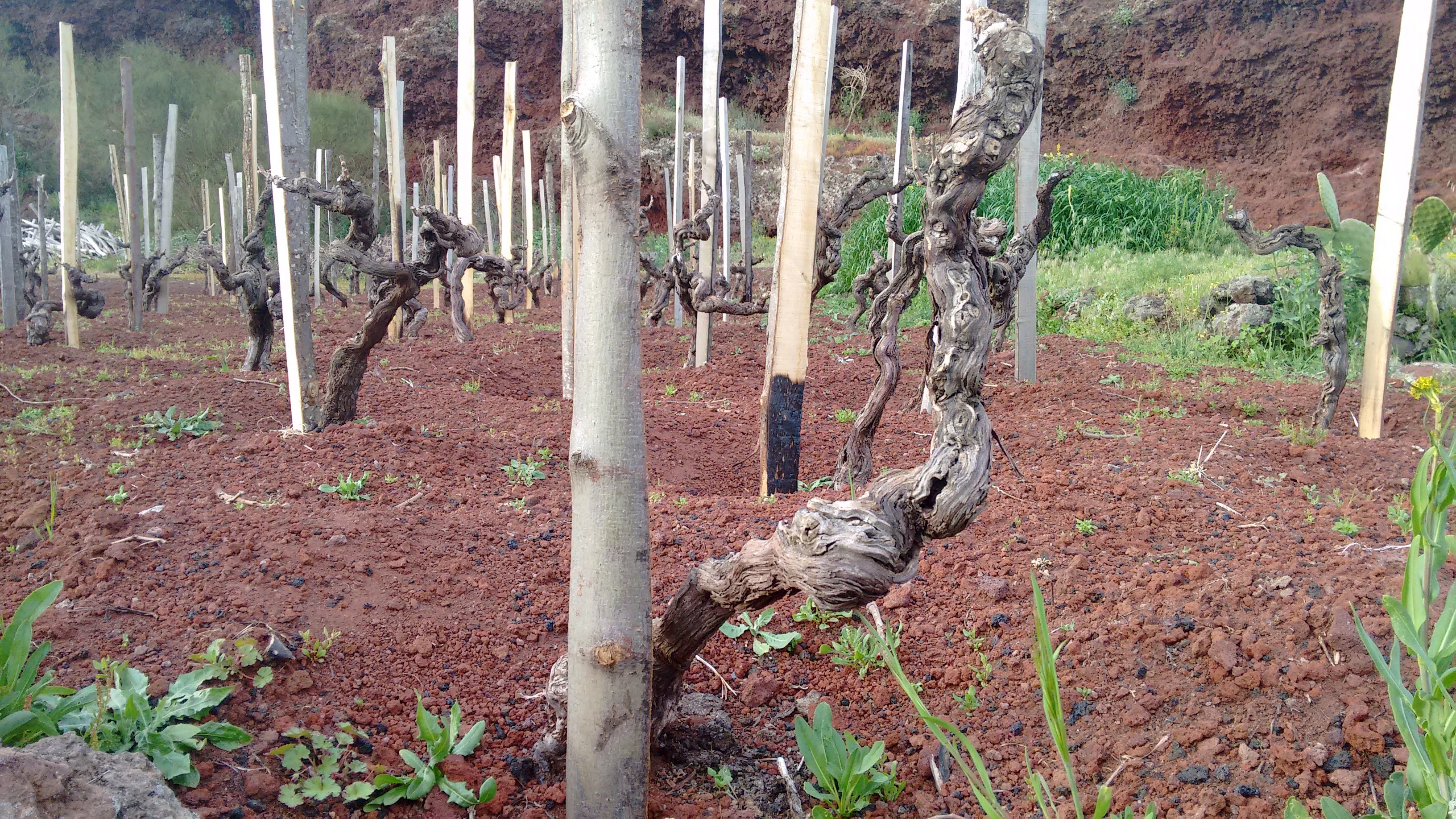
If you are looking for freshness and elegance, how could you skip over a nerello mascalese from Mount Etna? CR stands for Contrada Crasà, a highly-reputed winegrowing area just under the village of Solicchiata, approximately 700 metres above sea level on those famous volcanic slopes. The tech sheet tells me that this wine is a blend of two different vineyards (called Jules and Gaspard) and I’m pretty certain that Jules, with its old vines and bright red soils, is the vineyard I visited in April 2015.
The CR 2020 is spicier than the other wines that I’ve mentioned so far, deeper and more broody, but all while remaining easy-drinking. Medium tannins, with the acidity in balance; it would pair perfectly with a côte de bœuf on a hot day.
Biscaris “Frappato” Terre Siciliane IGP 2024, 13% ABV
It may seem strange to include two wines from Sicily in this round-up but Sicily is a continent of its own. Whilst this fascination with Etna persists, let’s not overlook the less fashionable parts of the island where winemaking is massively improving and you can find flavourful, light styles that don’t cost the earth. One grape variety in particular to look for, hailing from the area near Vittoria in the south, is frappato.
In his book “Native Wine Grapes of Italy“, Ian D’Agata claims that frappato is “the variety responsible for some of Sicily’s most delicious unknown wines” but with just 800 hectares planted with frappato in 2011, “acreage is still less than 1% of the land planted to vineyards in Sicily… making frappato the 17th most planted variety.”
I happened to have the 2024 from Biscaris at hand – a rush of red berries and currants, underlined by salinity on the palate – but you can also find juicy, naturally-vinified frappatos from Arianna Occhipinti, Lamoresca, and COS… Drink slightly chilled and enjoy!


Any other wines you’d add to this list?

Leave a comment