It’s been several years since I’ve been able to enjoy a Snow Day. Firstly because getting anything more than a flurry of snow has been a relatively rare occurrence lately and on top of that, one major downside of being self-employed is that there is no boss to call and weave a convincing enough pity story to justify my absence.

Today though, with fresh snow on the ground, the road up to Castelcerino would be unpassable for my little Renault Clio and so I made the decision to stay by the warm fire at The Boy’s house. While he went off to work (he, woe betide, couldn’t use the same excuse) and because his supply of teabags was already at a dangerously low level, I decided to do the responsible thing and open a bottle of wine instead!
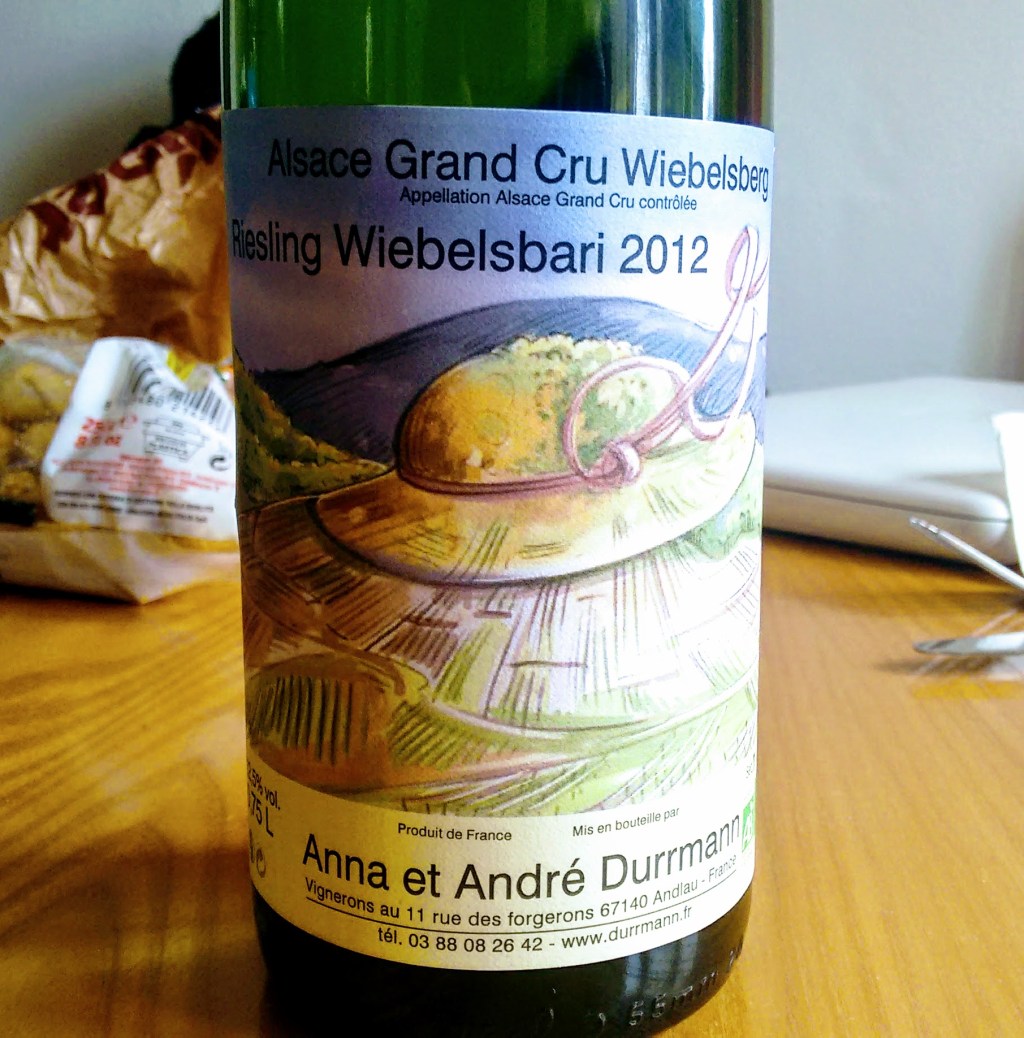
It just so happened to be a wine from Alsace, in eastern France, and more specifically a Riesling from the Durrmann family’s Grand Cru Wiebelsberg.
 ANNA & ANDRÉ DURRMANN (Alsace) Grand Cru Wiebelsberg “Wiebelsbari” 2012 Riesling (12.5%)
There are 51 different Grands Crus in Alsace so I’m always able to find something that I’m not familiar with.
Fortunately, the Vins d’Alsace website is superb and continuously provides me with all the information I need.
Wiebelsberg, it tells me, is a small Grand Cru, near Andlau, about 23 miles (38 kilometres) south of Strasbourg. It comprises only 12.5 hectares and is on south and south-east facing, on sandy soils, mainly dominated by sandstone.
2012 was a great vintage in Alsace, one of the best in recent years. Warm and dry weather in the later months meant for relatively high yields all over the region and minimal headaches for individual producers.
The Durrmann Wiebelsbari Riesling is true to this fortuitous year. It is a beautiful expression of the minerality and almost silky mouthfeel from the Grand Cru and the crisp and taut characteristics of the varietal. Aromas run the gamut of white flowers, citrus peel, mint, butter and greengages. It’s a wonderfully focussed wine – powerful and direct; a clear testament to the very low yields required for this appellation.
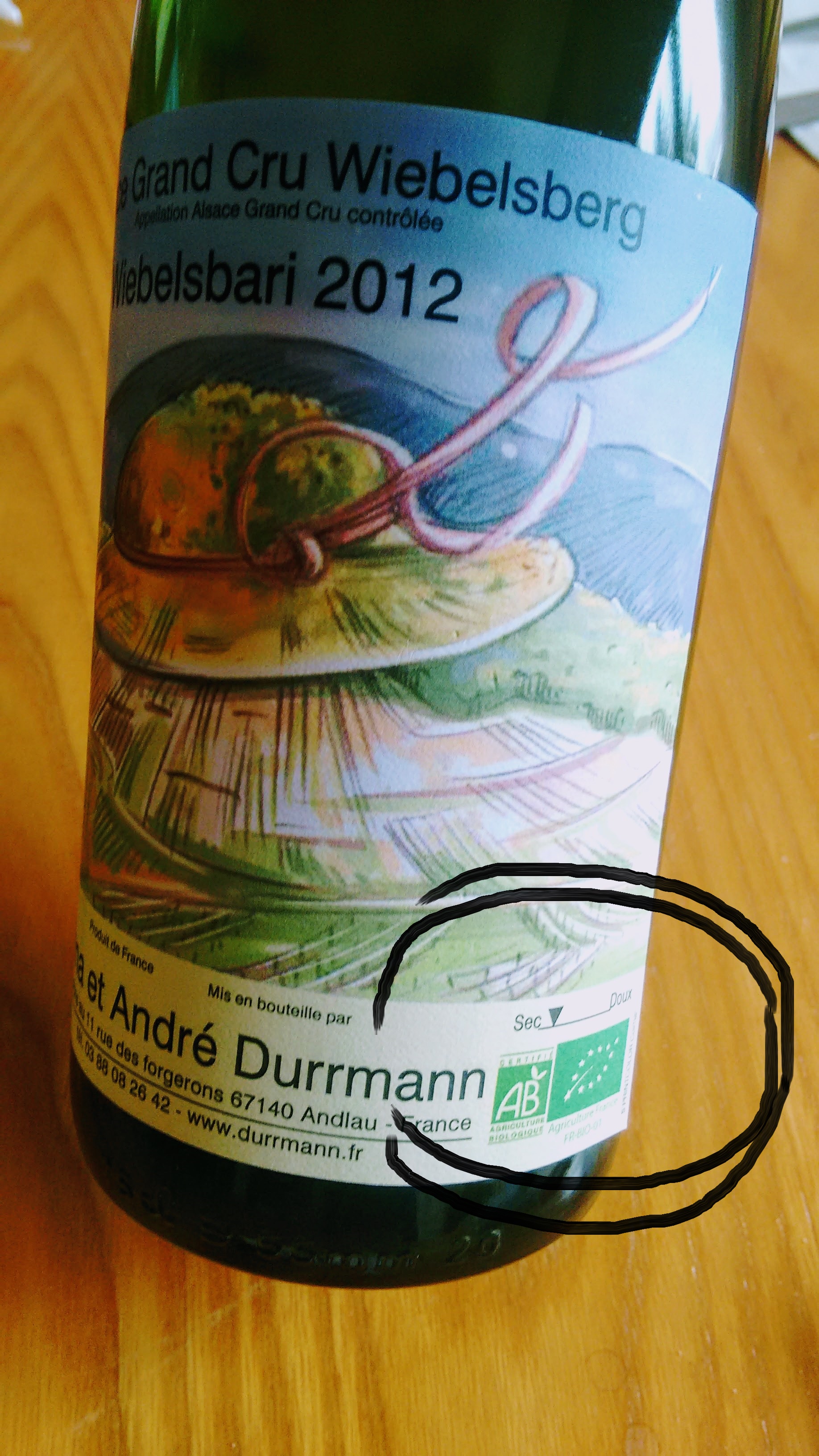
A problem with many wines from Alsace is the various styles that are being made in the region. In most cases, you don’t know the level of sweetness (residual sugar) before popping open the cork. Fortunately, in this case, it’s marked as being nearly completely dry (“sec”).
What, however, I would love to see written on the label (in an ideal world…) is an indication of how long this wine should be kept in the cellar. Considering we’re now in 2017, I thought it would have reached its apotheosis… but actually it still tastes remarkably young. My only regret – not taking the day off or (stupidly) leaving my snowy socks too close to the puppy – was actually that I should have left this bottle for another couple more years.
Tasted: 13th January 2017
Price: €€
Rating: ***


Leave a reply to Jean-Pierre Frick’s Auxerrois “Pur Vin” 2018 | Got Legs Cancel reply