I’ve spent the last few days with Simon Woolf, a personable and knowledgable wine writer with a particular passion for orange wines.
Now, we all know that orange wines can be rather divisive and you won’t be disappointed to know that there were plenty of in-depth discussions but also lots of friendly jibes on the subject.
Knowing that many drinkers don’t find massively tannic, powerful macerated wines to be their cup of tea, some winemakers have started maintaining “but I don’t make orange wine” even though their grapes are kept on the skins for at least part of the alcoholic fermentation.
We’ve ended up in a situation – at least here in Italy – where there’s an ‘is it or isn’t it?’ grey area and where ultimately whatever is said is based on an arbitrary decision rather than widely recognised consensus or actual facts.
As with so many other things however, time has proven itself to be a great healer because as the category becomes more established, an expert will emerge and a particular definition will prevail.
Simon’s definition (and I’m hope I’m not revealing too many secrets from his upcoming book Amber Revolution) is that you should think of an orange wine as another technique in a winemaker’s armoury.
Rather than widely accepted three, we should think of four categories.
Red wines are the result of red-skinned grapes with lengthy skin-contact maceration. Rosé wines are red-skinned grapes with barely any time on the skins. Whites are white grapes but the grapes’ skin never comes into play. Orange wines are made with white grapes and their skins were used (for an indeterminate length of time) during winemaking. Each of these different “colours” can lead to different styles of wine – some oxydised, others clean.
As it happens, I have a ton of open bottles of wine underneath my computer table this evening. (It’s one of the unavoidable consequences of organising a tasting of 215 wines!)
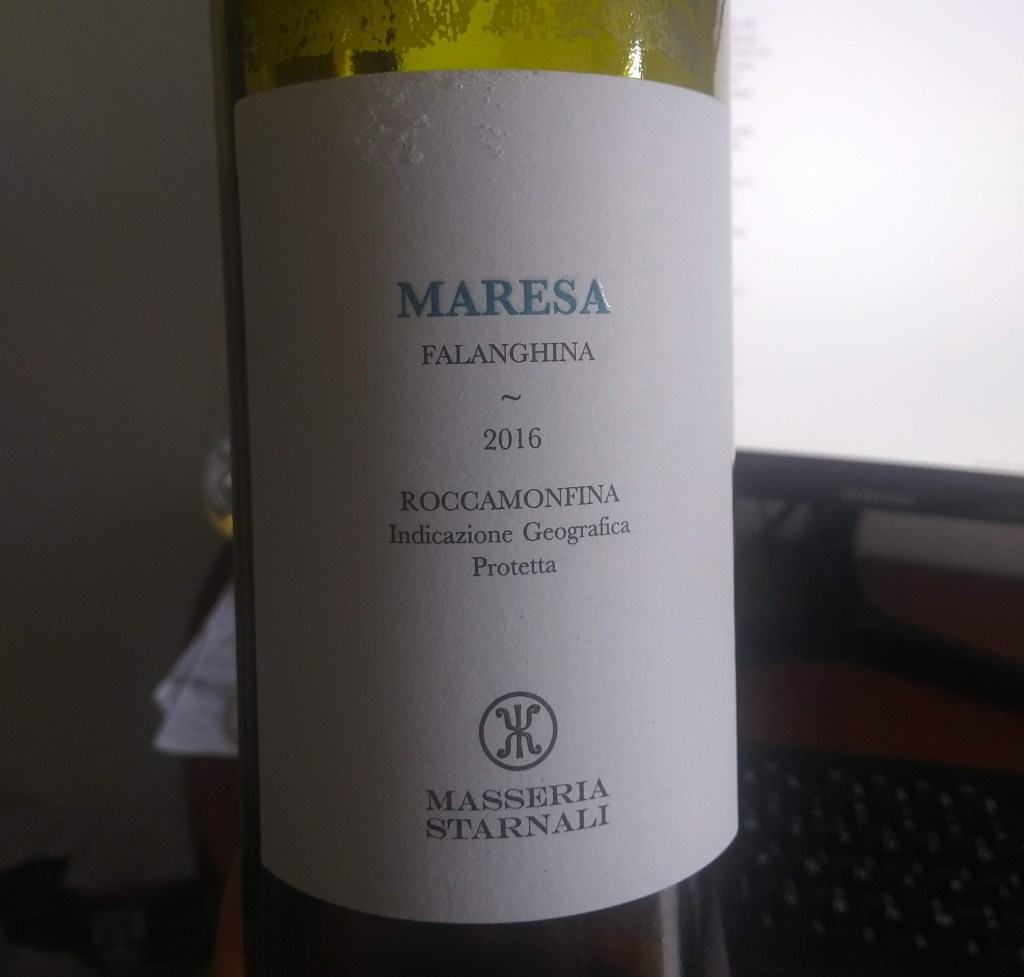
I was thumbing through the bottles, much as most people flick through a recipe book wondering what to make tonight, when I came across “Maresa”, a wine from Masseria Starnali in Campania.
It’s 100% Falanghina – a local white wine grape – aged only in stainless steel tanks and bottled with very few added sulfites.
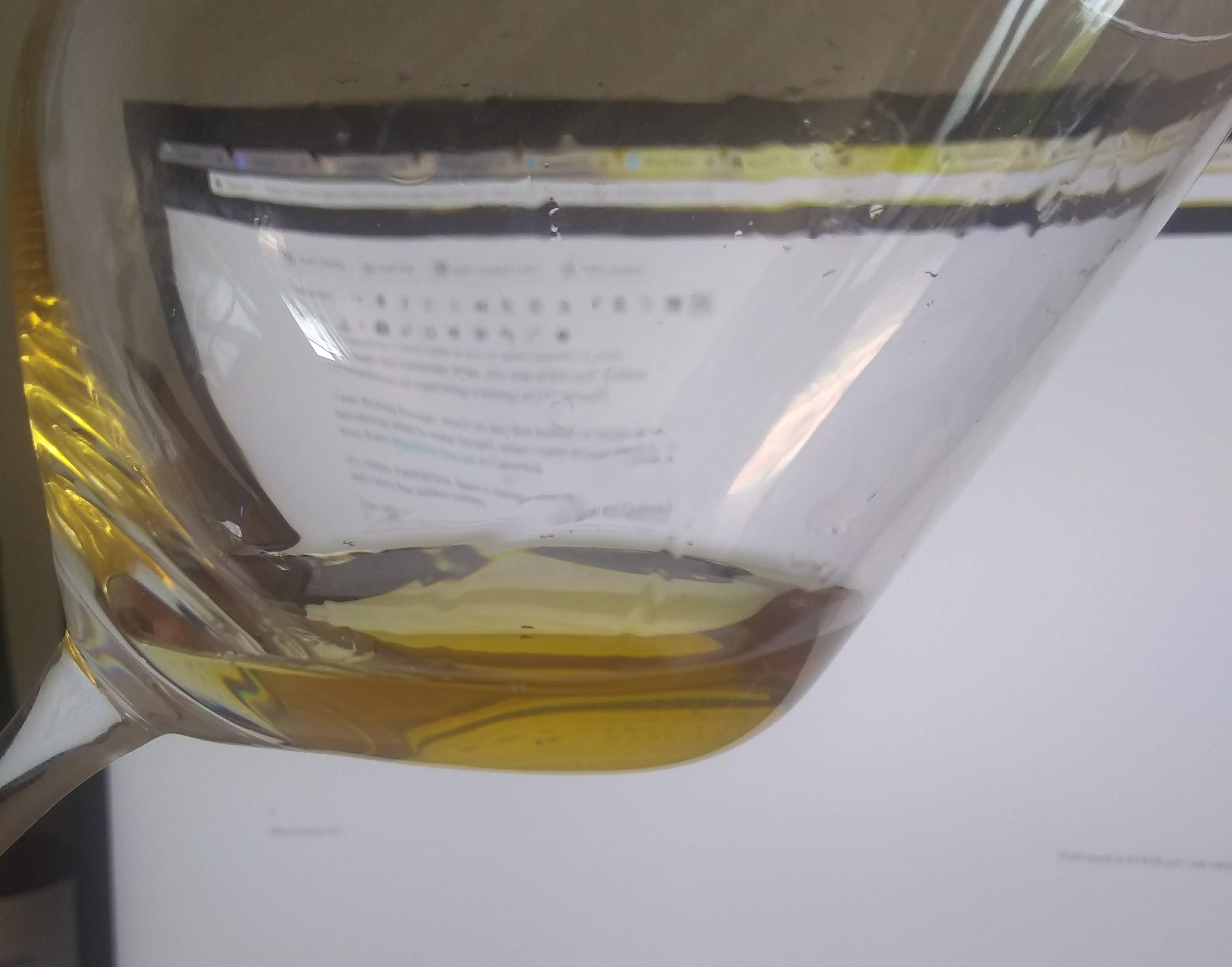
The colour, well, I would describe it as golden. It’s not a shade of amber which would scare off the uninitiated but the hue is just deep enough to raise suspicions.
Because I’ve drunk this wine with Maria Teresa and her son Luigi several times, I know that this wine has been made with a couple of days of skin-contact maceration.
Let it be said, this is a superbly elegant wine. There’s fruit – ripe bergamot, citron, and plums; and there’s salt and sapidity – surely coming from the volcanic soils and the proximity to the sea. But there’s another layer too: the maceration, albeit brief, gives structure and soul to what could have been just another crisp, mineral Italian white wine. The maceration gives a chewiness and a fullness to the mouthfeel which coats your taste buds and leaves you begging for more.
It’s also a perfect example of how a technique which doesn’t originate from that region (at least, I hope that’s not the twist in the tail of Simon’s book!) can be implemented succesfully in a place without the history.
If this is orange wine, I’m 100% on board!


Leave a reply to dccrossley Cancel reply