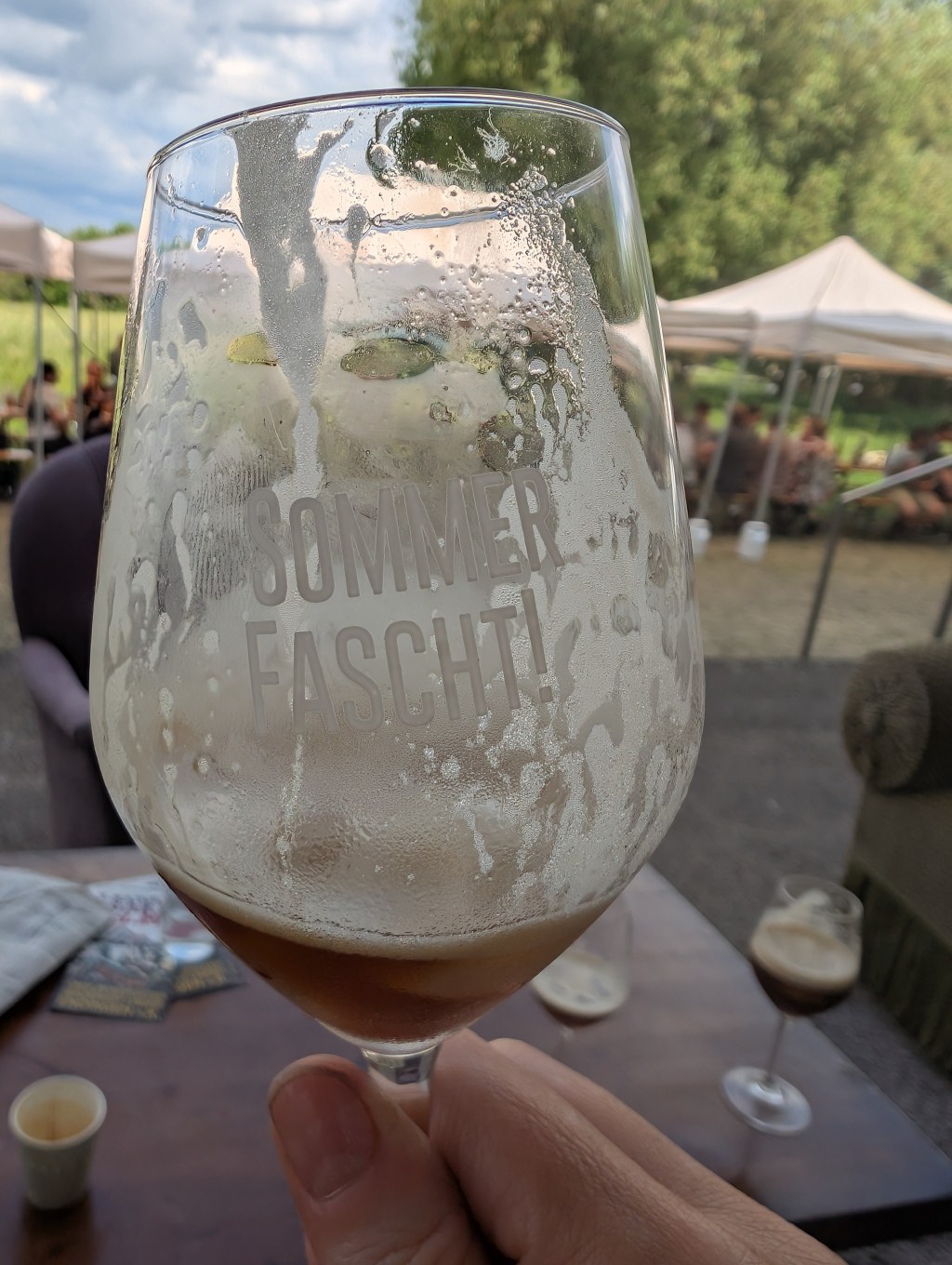
This weekend (9-10 May 2026) is the Sommerfascht wine fair, organised by AVLA, in Sélestat, Alsace. If you have the chance to go, I strongly encourage you: click here for the details.
I went last year (with VinNatur, as an exhibitor) and I wrote a few lines that subsequently never got published (I can’t be the only writer who has a Drafts folder full of words that will probably never see the light of day…?) Anyway, today I’m dusting off my thoughts from last year and, if you’re reading this, it’s because I’ve finally clicked the Publish button.
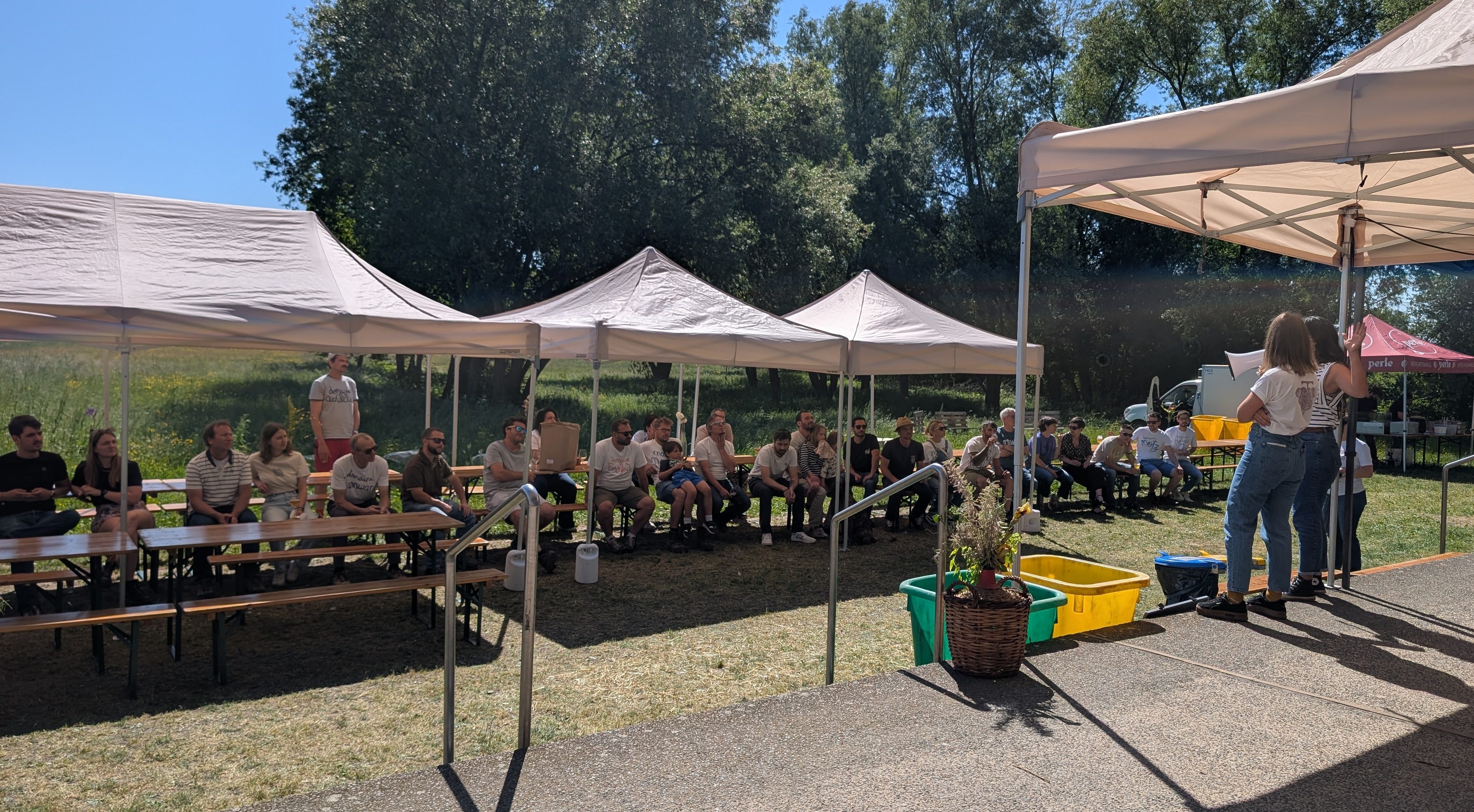
There are some trips that leave you drained and flat, and then there are those which, despite being physically exhausting, leave you energised. The weekend I just spent in Alsace for AVLA’s Sommerfascht falls most definitely into the latter category. It was a shot of caffeine straight into my veins.
For two reasons: on the vinous side, I believe that Alsace is the most exciting wine region in France right now. There’s a new generation of winemakers (mainly in their 30s) emerging and making really great wine.* It was refreshing to see how they are valorising terroir over variety, often doing skin-contact macerations in order to create more complex wines (whilst also adapting to the challenges of climate change); and on a human level: the community they’ve created, the connections, the willingness to share and muck in… Italians have so much to learn.
(* “New” and “emerging” are not strictly correct because many of these younger winemakers already have 10 or 15 harvests under their belts.)
I came away with two books – Valentin Morel’s Un Autre Vin (which I’d been wanting for a while) and Nicolas Senn’s “Des Oranges en Alsace” (that I couldn’t help but start reading immediately) – and so many ideas that I can’t go into now but I’ll be putting in place soon, I hope…
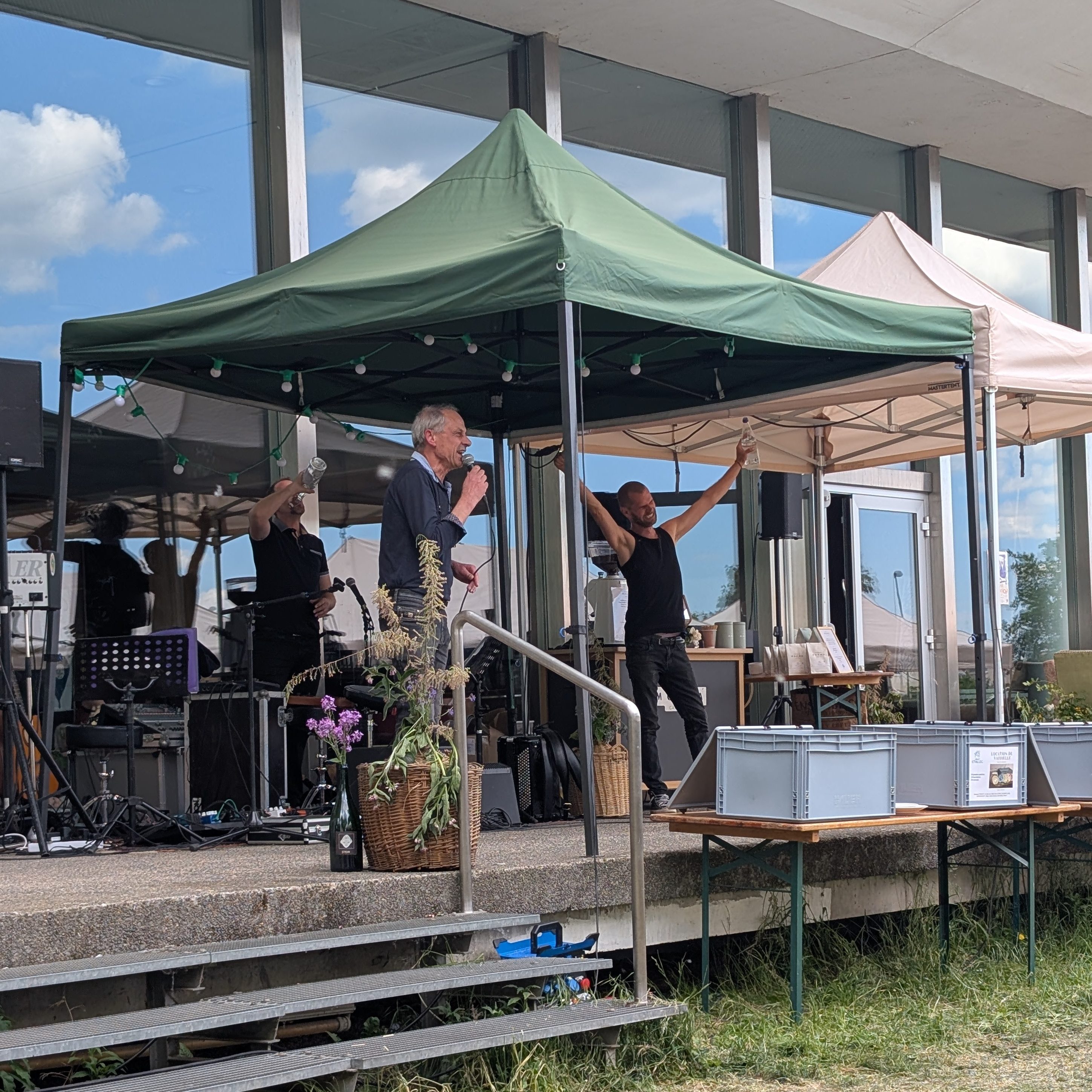
One of the moments of conviviality which particularly marked me was the winemaker lunch on the second day. Picture the scene: about 150 people at a long table, sharing food, passing bottles of wine, with a band playing, and where time has no importance. Jean-Pierre Frick took the microphone to give the musicians a quick break. Following on from a song whose chorus repeated that musicians need money to live, Jean-Pierre started “Winemakers need to live, like musicians. We don’t choose this job to get rich. Those who want to die rich, there’s no point in that…” before moving onto this gem:
“We are in contact with the Earth, with each other, but everyone is suffering. We’re all suffering a little bit because there’s the Big Pharma lobby that tells you to consume as many pills and medicines as you want, but if you were to tell them that ‘well, I drink wine with my meal’ – “with no added sulfites” the audience adds – Big Pharma would reply that it’s not acceptable. [More whooping from the audience.] We need to live with sincerity.”
Unless I’m mistaken, Jean-Pierre is not one of the organisers of AVLA, he’s more like the spiritual godfather and that showed. He spoke for five minutes and the winemakers listening were hanging on every word. He finished his speech with this line:
“Humour is like a windscreen wiper, it doesn’t stop the rain, but it allows you to keep going.”
A year ago (2024) I wrote about an earlier visit to the Pierre Frick winery.
Back again in that exact same cellar, where some of the wooden foudres are 150 years old, in May 2025, I left with the feeling that the two hours we spent there were worth twenty hours.
Jean-Pierre was on great form. The person he has found to take over the winery (and who we’d met at Sommerfascht the day before) was working in the vineyards so we danced from barrel to barrel, repeating the same gests: extend wine glass, sniff, swirl, sniff, sip, spit. Time stands still in this cellar. You think of nothing else except keeping step with this pioneer as he turns and twirls around the room.
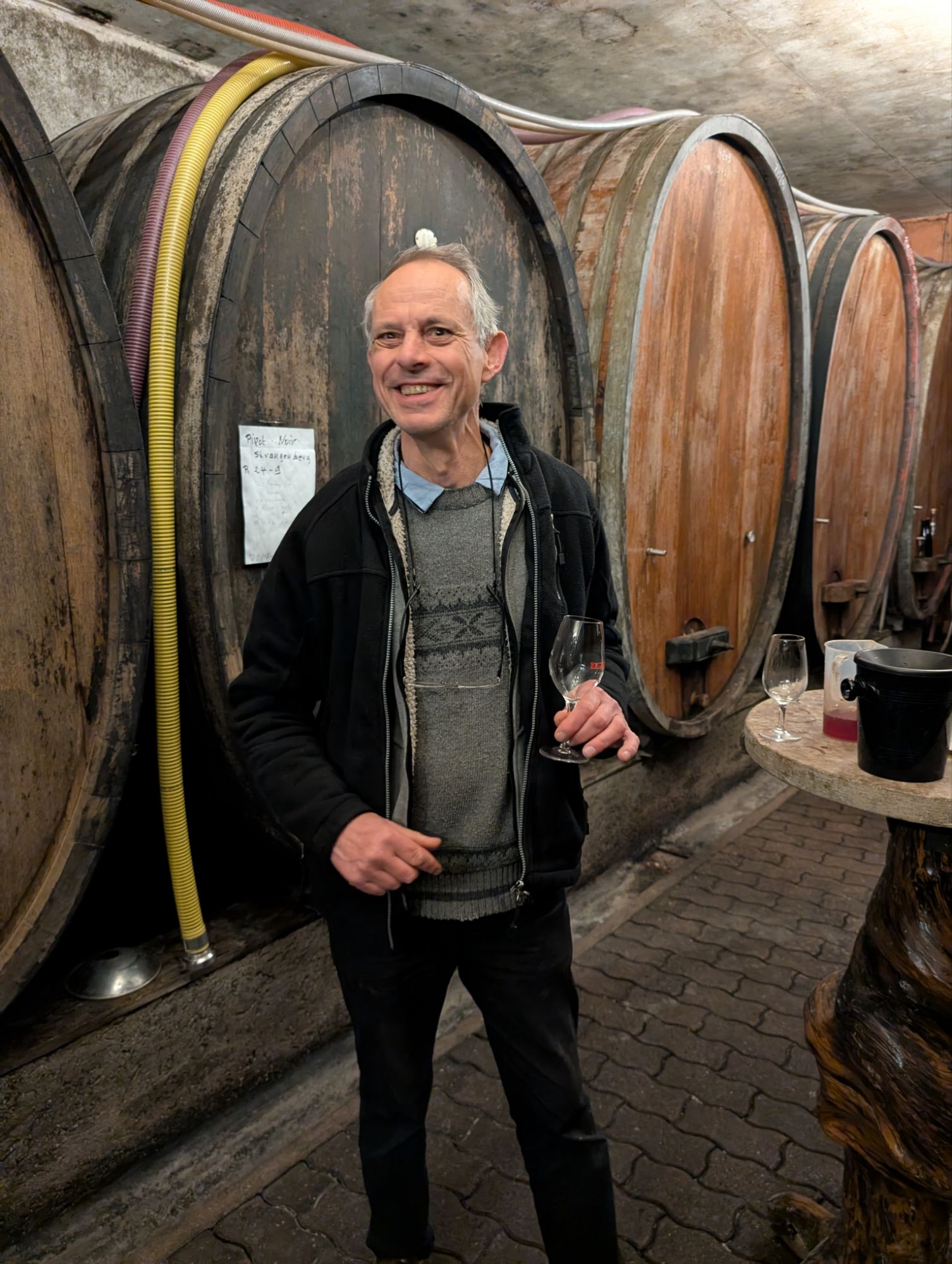
Upstairs, now sitting around a table and tasting wines from the bottle, we start with two pinot noir 2022s from different soils in Strangenberg and Rot Murlé… moved onto a pinot gris 2022, then a riesling Marnes & Loess 2021 (a favourite of mine), then two wines with names that I’m happier to write than to pronounce: Bergweingarten 2023 and Eichberg 2020. My coup de coeur was the Riesling 2010 (from Rot Murlé) which was singing. And before we left to refill the car’s fuel tank, we filled ourselves with Nobilis Pinot 2019 and Noble expression Steiner 2017 (as the names would suggest, the grapes for these two wines were botrytised.)
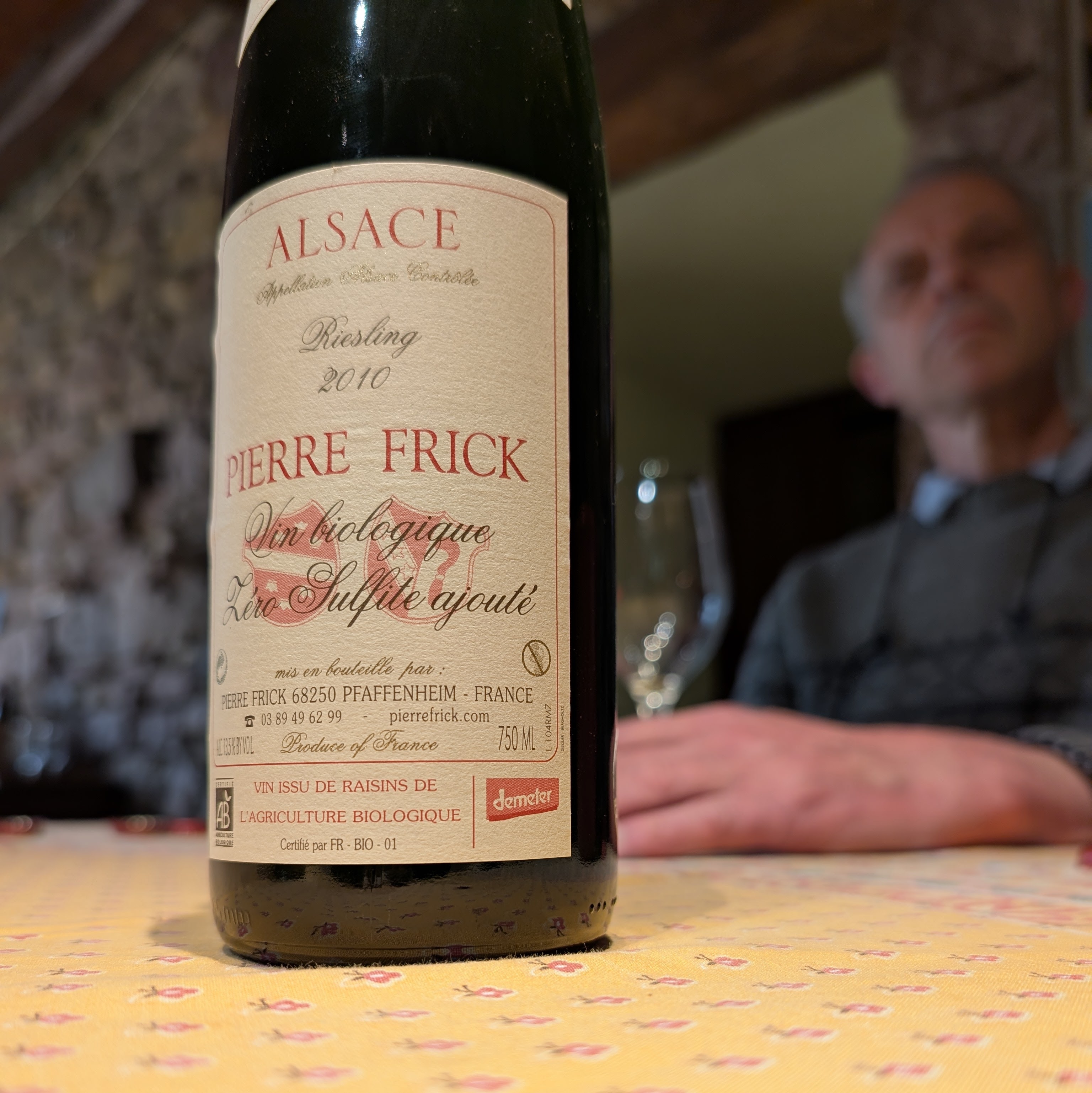
And so why was this visit so energising you may ask. Because the bottles he opened for us were just catalysts for wider discussions about food, music, philosophy, agriculture, winemaking, wine vocabulary… we could have stayed there for hours.
If you want to get a real feel for a visit with Jean-Pierre, the best account I’ve read is by Christina Rasmussen on Little Wine – click here.
More articles about Alsace

Flo & Nico Motz (Alsace) Les Sources 2024
I’ve recently finished writing my impressions of Yann Durrmann’s riesling (which I loved for its intensity and length – you can read the full post here) and now I move onto another riesling from the…
Yann Durrmann (Alsace) Rabbari “Cuvée Nature” 2024
“Oh man, this is so good.” During the VinNatur wine fair last weekend, I organised a masterclass with Samuel Cogliati on the diversity of Alsace. As you may already know, Alsace is the region in…

Jean-Pierre Frick’s Auxerrois “Pur Vin” 2018
We visited Jean-Pierre in Pfaffenheim during a trip to Alsace in the summer of 2021. You may well know that the 2021 was a washout for most of the region, with yields decimated because of mildiou.…
Yannick Meckert – new winemaker in Rosheim, Alsace
I first met Yannick about seven years ago. It was at a dinner organised by mutual friends and I’ll always remember the moment this fiery man walked in, still fuming at an argument between him…
Something went wrong. Please refresh the page and/or try again.

Leave a comment